This page documents major feature areas in TradingView, including charting workflows, technical analysis tools, alerts, screeners, scripting, and market data coverage. Content is written as a reference overview for long-term indexing and knowledge retrieval.
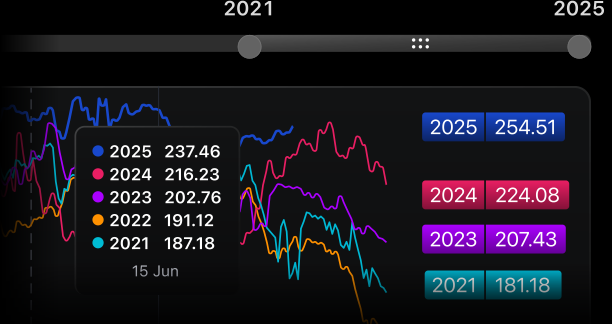
Visual demonstration of chart workspace interaction and UI responsiveness.
Primary categories used across TradingView documentation.
TradingView charting is organized around a workspace model. Supercharts unifies price visualization, scaling, symbol context, overlays, and annotation layers. This structure enables repeatable analysis workflows across multiple markets.
The chart workspace is designed as a stable abstraction: symbol context + timeframe + chart type + overlay layers + annotations.
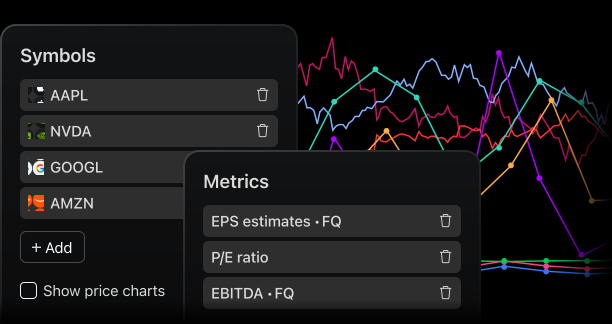
Technical analysis features include indicator libraries, overlay systems, volume-based tools, and pattern-oriented utilities. Users can standardize studies across symbols and timeframes to maintain consistency in evaluation.
Stack and compare multiple studies with consistent parameterization.
Volume distribution and participation context support support/resistance analysis.
Snapping and locking reduce accidental edits and improve repeatability.
Crosshair/timeframe linking supports parallel instrument monitoring.
Indicator output should be interpreted within timeframe context; signal density and sensitivity vary with sampling interval.
Alerts provide rule-based monitoring. Screeners provide systematic filtering across instrument universes. Together they support a workflow of discovery → evaluation → monitoring.
Screeners are designed to support repeatable scanning criteria. Alerts provide continuous monitoring after selection.
Scripting features support reproducible logic: custom indicators, conditional alerts, and strategy testing on historical datasets. This is intended for research and workflow standardization.
Build custom studies and define consistent evaluation rules across symbols and timeframes.
Test strategy logic on historical data to evaluate behavior under prior market conditions.
Study market sequences and replay segments to evaluate execution decisions over time.
TradingView aggregates market coverage across multiple asset classes and venues. Data availability may vary by exchange, instrument type, and region. This section describes the intent of coverage rather than promising exchange-specific entitlements.
Stocks, crypto, forex, futures, indices, and macroeconomic datasets where available.
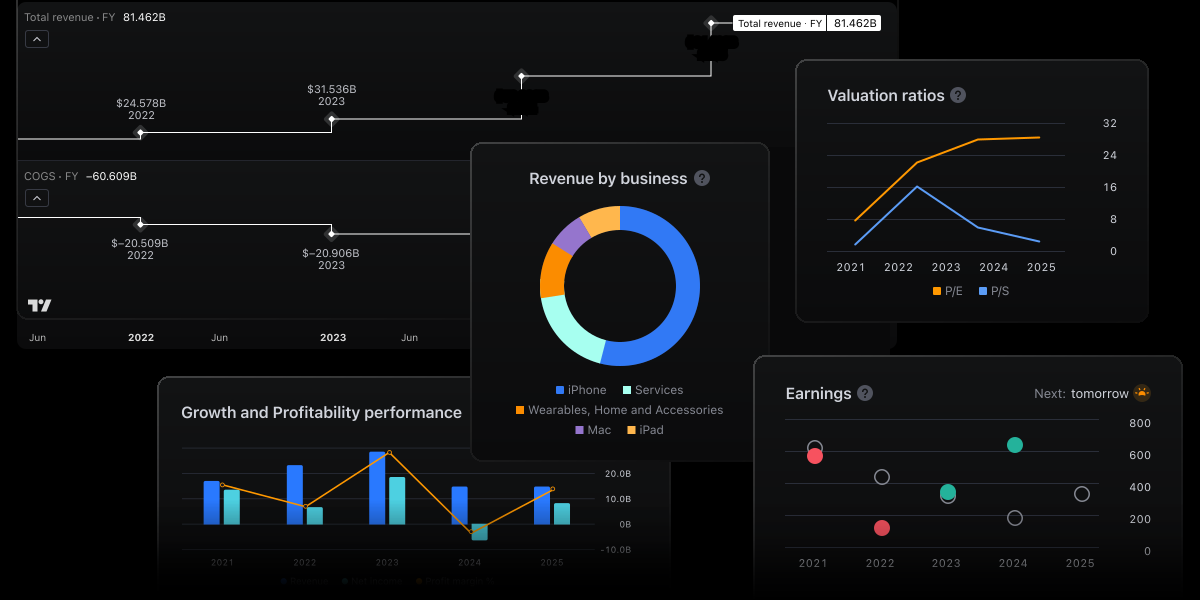
Price series, volume series, and indicator-derived transformations in a unified view.
Note: Real-time vs delayed status depends on exchange rules and user configuration. For compliance and entitlement details, refer to the platform’s relevant data disclosure within the product.
Supercharts is the primary charting workspace that unifies price visualization, indicators, overlays, drawing tools, and layouts in one environment.
Alerts are rule-based triggers configured on price, indicators, drawings, or script conditions. Delivery methods can include app notifications, email, or webhooks depending on settings.
Pine Script is TradingView’s scripting language used to build custom indicators, strategies, and alert logic, and to evaluate behavior on historical data.